

Comfortable treatment to protect your oral health
A tooth extraction may be necessary when a tooth is severely damaged, decayed, infected or causing problems for your oral health. At Finest Smile, we always aim to preserve your natural teeth wherever possible, but when extraction is the best option, our experienced dental team will ensure your treatment is carefully planned and carried out as comfortably as possible.
We provide tooth extractions in Southbourne, Bournemouth, including both straightforward and surgical extractions. We will explain your treatment clearly, discuss any concerns you may have and provide appropriate aftercare advice to support your recovery. If you are experiencing dental pain or have been advised that a tooth needs to be removed, book a consultation with our team today.
Why does my tooth need to be extracted?
There are many reasons why a tooth might need to be extracted, such as:
-
Cavities
A cavity is a hole in a tooth that can be caused by bacteria. If a cavity is not treated, it can eventually cause the tooth to decay and break.
-
Impacted wisdom teeth
Wisdom teeth are the third molars that grow in at the back of the mouth. Sometimes they do not have enough room to erupt properly and can become impacted. Impacted wisdom teeth can cause pain, infection, and damage to other teeth.
-
Trauma
A tooth can be knocked out or broken if it is hit by a hard object. If this happens, the tooth will need to be extracted.

What happens when I have a tooth extracted?
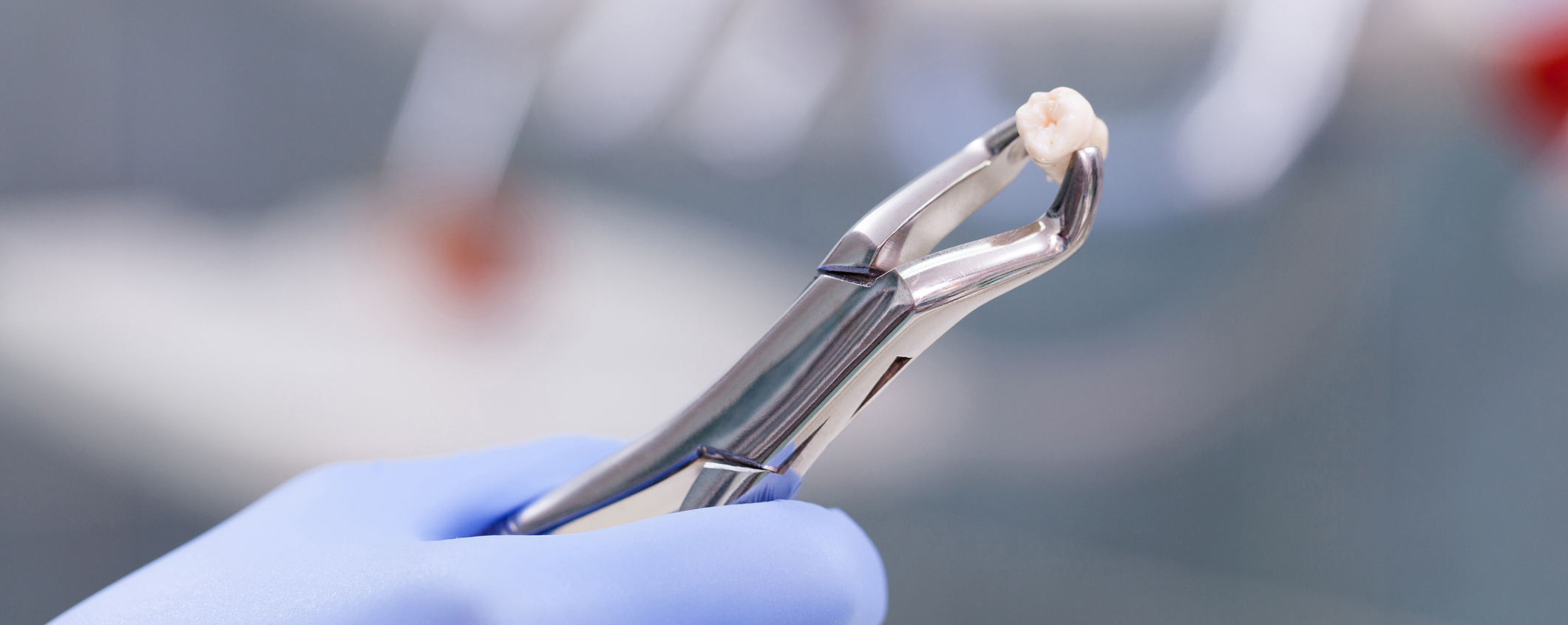
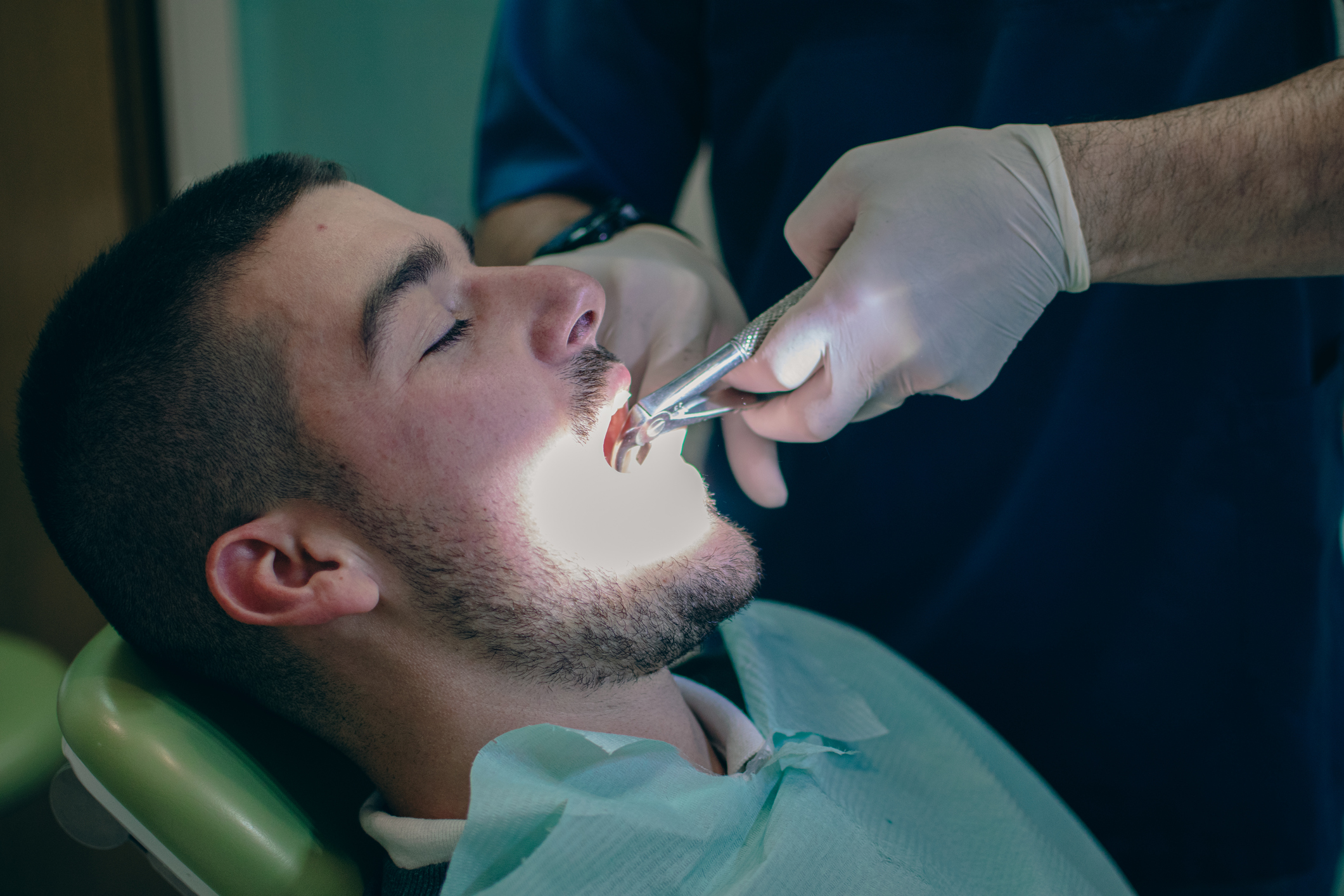
If you need to have a tooth extracted, there are a few things you can expect. We will first numb the area around the tooth. Then we will use a specialist tool to loosen the tooth and another tool to remove it. The extraction site may bleed for a few minutes after the tooth is removed, but we will pack the socket with gauze to help stop the bleeding and aid healing.
Extractions can be a real form of relief, especially if the problem tooth is causing dental pain. In cases of a dental emergency, extractions are a common solution to addressing a serious dental problem and providing immediate relief. There are many options for replacing missing teeth as well, such as dental implants.
More on dental implants

Types of tooth extraction
Simple extractions
Removing teeth can be a very straightforward procedure. For simple extractions, we loosen the tooth with dental forceps under local anaesthetic. The tooth comes out easily without touching the surrounding gums.
Surgical extractions
In some cases, we may need to give the tooth a helping hand to remove it successfully. A surgical extraction involves making a small incision in the gum to remove a tooth that may have broken off or is concealed under the gum. For large teeth, we may need to remove them in parts.
Are you a nervous patient?
We can offer dental sedation to help you get the dental care you need.
Find out more
After your tooth extraction
Immediately after your tooth has been taken out please do not eat for a few hours, and do not rinse or disturb the blood clot in any way. From the following day, try to keep the site clean by rinsing it with warm, salty water after each meal. We will supply you with sterile gauze – please bite down on this for an hour after treatment, as this will aid the healing process. Sometimes we will prescribe antibiotics after an extraction, however in every case, we will advise you of the precautions you need to take to avoid an infection. We will always call you the next day to see how you are, and offer any help or advice that is needed.
Encourage healing of the affected area by eating softer foods and chewing on the opposite side of your mouth. Also, try to avoid smoking or using a straw, as these can dislodge the clot that forms in the hole after extraction.
If you experience intense pain a few days after an extraction, you may have a condition known as dry socket, which occurs when a blood clot fails to form or is dislodged prematurely, exposing the bone. In this case, you will need to see the dentist who will help to rectify the problem and alleviate any pain.
Please contact us if you have any questions or would like to chat about your tooth extraction.
Contact us todayFrequently asked questions
-
You will need to take it easy for a few days after the extraction. Avoid hot food and drinks and avoid chewing on the side of your mouth where the tooth was extracted. You may also experience some pain and swelling. These symptoms should go away within a few days. If you have any questions or concerns about tooth extraction, please talk to us.
-
The recovery time for wisdom tooth extraction varies from person to person. Most people can return to their normal activities within a few days. However, some people may experience swelling and pain for up to a week. It is important to follow your dentist’s instructions for care and recovery.
-
There are a few risks associated with wisdom tooth extraction, including:
- Infection
- Bleeding
- Dry sockets
- Nerve damage
These risks are rare, but they can occur. It is important to talk to your dentist about the risks of wisdom tooth extraction before the procedure.
-
There are several benefits to having a wisdom tooth extraction, including:
- Relief from pain
- Prevention of gum disease
- Removal of impacted wisdom teeth
- Improved alignment of the teeth
If you are experiencing pain, infection, or other problems with your wisdom teeth, wisdom tooth extraction may be the best option for you.
-
In most cases, absolutely! If necessary, we are able to use modern techniques such as immediate tooth socket grafting to help maintain excellent bone levels to support a healthy implant. Please let us know if you are thinking about an implant after your extraction, and we will be delighted to book you in for a consultation with Dr. Westhuizen at your convenience.
-
Tooth extraction procedures today are far less painful than ever before, thanks to powerful anaesthetics. In many cases, a patient who has a tooth extracted experiences little or no discomfort and only minor bleeding. We’ll always make sure that the area is completely numb before beginning any treatment.